
Field note 02 · ridge and scale
Box Springs: the ridge is context, not a rating map
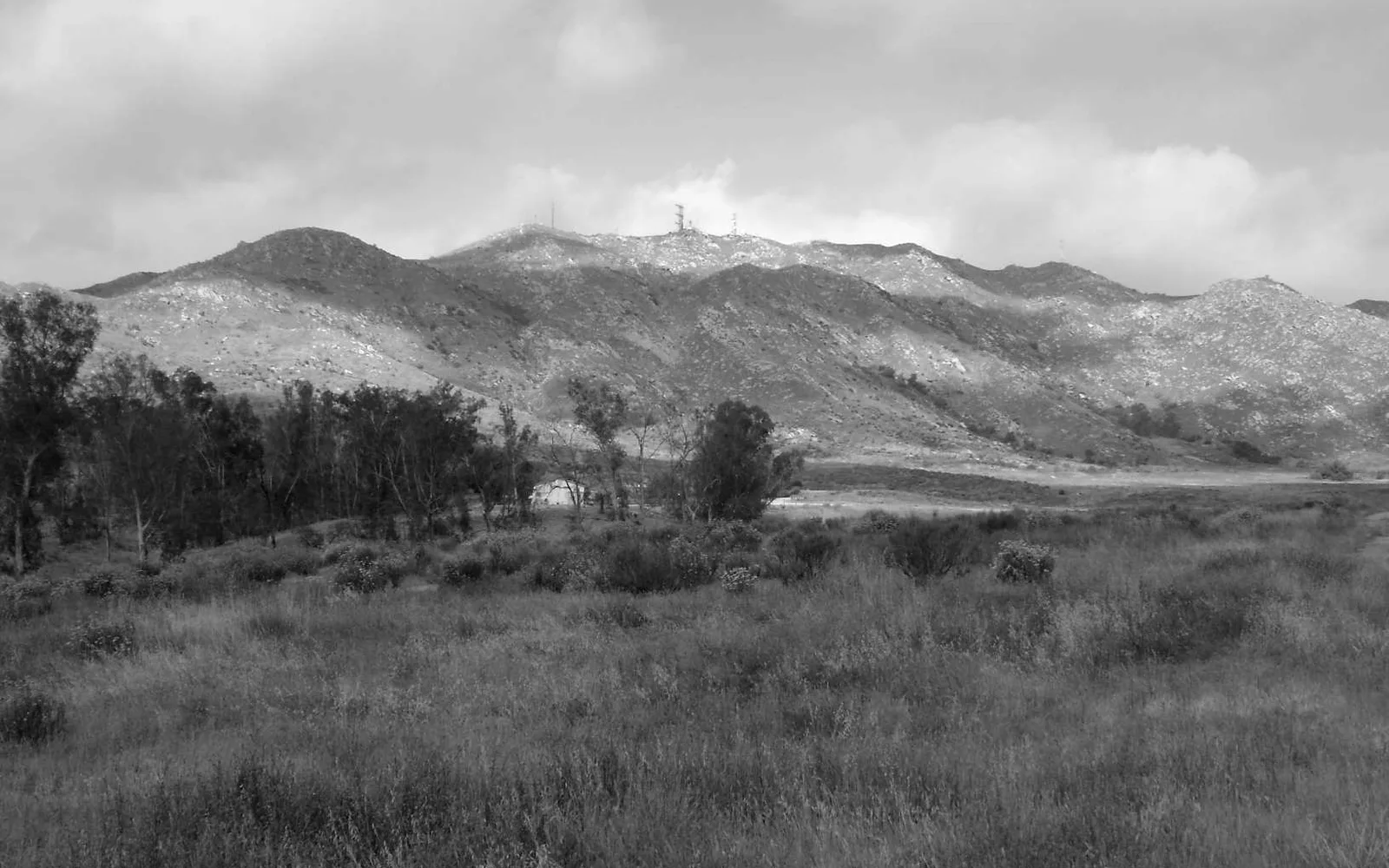
Box Springs Mountain Reserve rises along the northwestern edge of Moreno Valley. Riverside County Parks describes the reserve as protected open space with trails and broad views, while its trail map identifies access points, routes, elevations, and boundaries. The landscape photograph on this page records open slopes and ridgelines, not a particular parcel. Conditions on trails and roads can change, so visitors should use current park information. The image cannot establish wildfire, flood, theft, traffic, or any other address-level exposure.
A large landmark tempts people to reason from a regional impression to a household conclusion. Insurance review requires the opposite approach. Begin with the exact property, current occupancy, construction, systems, maintenance, access, and insurer questions. Public hazard information may be relevant when it is current and location-specific, but a scenic view is never a substitute. An insurer’s filed rules and verified application facts determine whether a policy is offered and on what terms.
Turn scale into a list of answerable questions
For a home, ask whether the reconstruction estimate reflects the actual structure, attached improvements, detached structures, debris removal, labor, materials, and code requirements. Confirm how deductibles work and whether particular causes of loss have separate amounts. Review additional living expense, personal-property settlement, liability, and special limits. Flood and earth movement are commonly outside standard homeowners protection, while other exclusions and conditions depend on the specific form.
For fire-related questions, separate prevention work from the contract. Photographs, clearance records, roof or electrical upgrades, and inspection documents can help establish what was done; they cannot promise eligibility or a claim decision. Ask how vacancy, rental use, remodeling, or business activity affects the form. If a notice requests action, preserve it with the response and proof of completion. Never assume a general community description satisfies an insurer’s individual request.
Plan for movement without predicting loss
Trail planning uses a route, current conditions, water, timing, and a return plan. Household preparedness can be similarly practical: maintain an inventory, keep policy and contact copies away from the residence, identify temporary lodging needs, and document essential medications or equipment without sending sensitive details through a web form. Review evacuation and communication plans with public authorities’ current guidance rather than treating an insurance page as emergency instruction.
Box Springs provides a recognizable horizon and a public open-space resource. Its useful insurance lesson is about scale: regional context prompts questions, while the contract answers them only after exact facts are supplied. Keep public-safety guidance separate from policy documents and check each at its current source. The California Department of Insurance’s residential guide explains common policy sections, exclusions, and shopping considerations. No ridge determines a household result; the issued policies and endorsements control.